
Microsoft Technical
Why M365 Copilot Should Be Every Partner’s AI Starting Point
| 4 min read

- Trinh TranAI Strategist
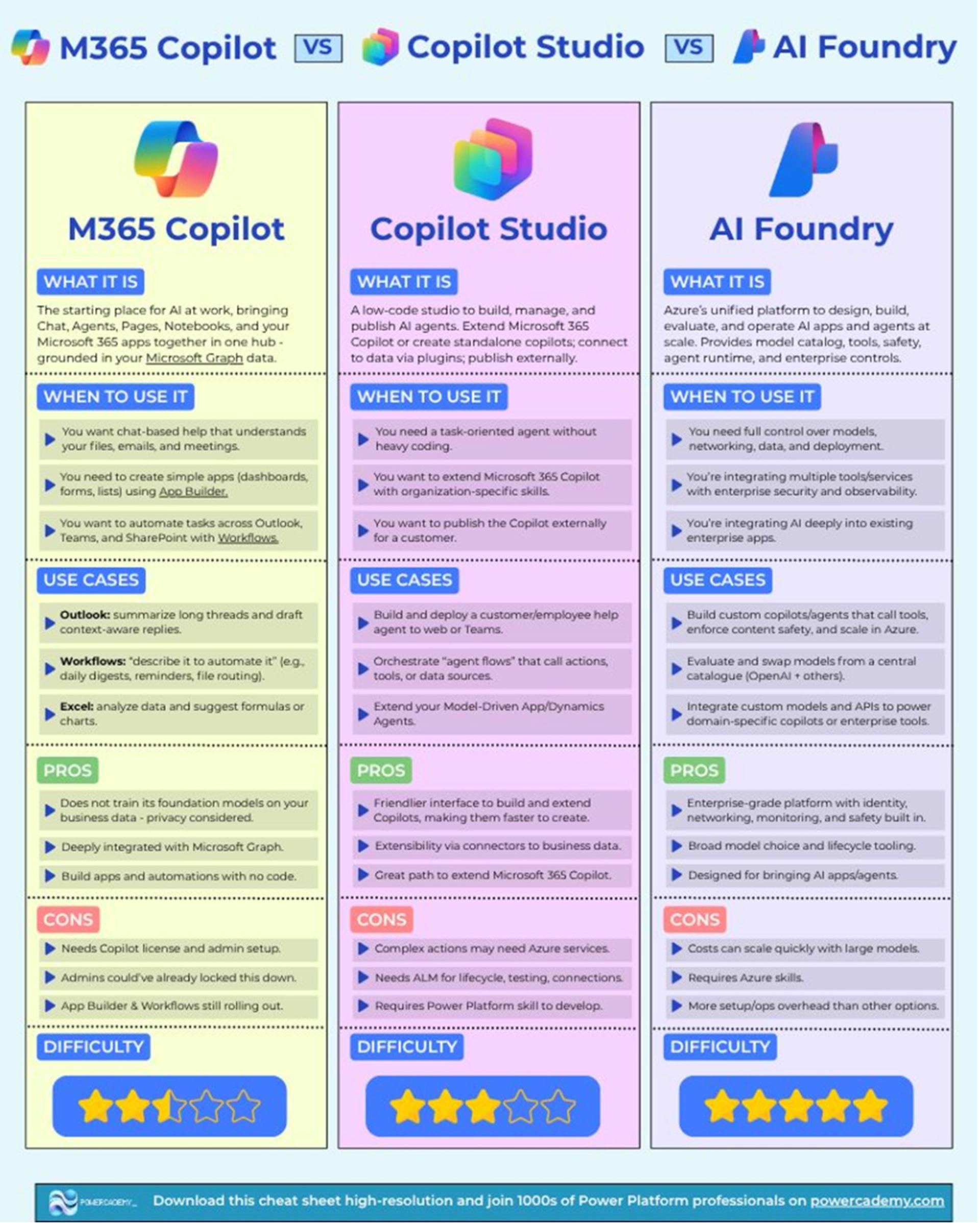
A popular infographic by Howdang Rashid compares M365 Copilot, Copilot Studio and Azure AI Foundry. His visual breakdown highlights the similarities and differences among the three options, but, as a partner focused on profitability and momentum, it points to a simple truth: M365 Copilot is the smartest place to begin.
Easy to Procure & Deploy
M365 Copilot is an AI layer embedded in Microsoft 365. Users engage through familiar apps like Word, Excel and Teams, and the service is fully managed in the cloud. This yields several advantages:
- Low friction – There’s no need to build custom models or stand up new infrastructure. Organizations simply activate the license and start receiving AI assistance. That ease accelerates adoption and reduces setup costs.
- Immediate productivity – Copilot can draft documents, suggest formulas and charts, summarize long email threads and recap Teams chats. Employees start saving time on day one, which translates to quicker service engagements and faster revenue recognition for partners.
- Lower overhead – Because the AI is run and updated by Microsoft, there are no servers to maintain or models to tune. That frees partners from operational complexity and allows them to deliver value with small teams.
Quick deployment and instant productivity make M365 Copilot an attractive path to profitability, especially compared with procode platforms that demand developer resources and infrastructure.
Unlocks More Services
Turning on Copilot opens the door to high value, recurring services. Partners can build a sustainable business around the following:
- Security posture updates – Copilot relies on SharePoint, Teams and other data sources. Over time, these repositories can accumulate overshared or outdated content. Microsoft’s SharePoint Advanced Management helps reduce oversharing and Restricted SharePoint Search allows administrators to review and correct permissions. Partners can offer security audits, data cleanup and permission governance as ongoing services.
- Identity & permissions cleanup – Ensuring the right users have access to the right data is critical for AI tools. Services like Microsoft Purview classify and label data. Partners can manage identity systems, review access controls and enforce data boundaries. This is work that’s both essential and billable.
- Adoption & change management – AI won’t deliver value if employees don’t use it effectively. Partners can run workshops, training sessions and prompt design clinics to help teams incorporate Copilot into daily workflows. These engagements can be repeated across departments and updated as features evolve.
- Governance and workflow automation – Organizations need clear policies on AI usage and data governance, and they often want to automate multistep processes. Partners can craft policies, design governance frameworks and build simple workflows using Power Platform tools. Because governance and automation require regular updates, they provide long-term revenue opportunities.
By positioning M365 Copilot as a gateway, partners create a pipeline of services that go well beyond initial deployment.
Microsoft Sellers Want This
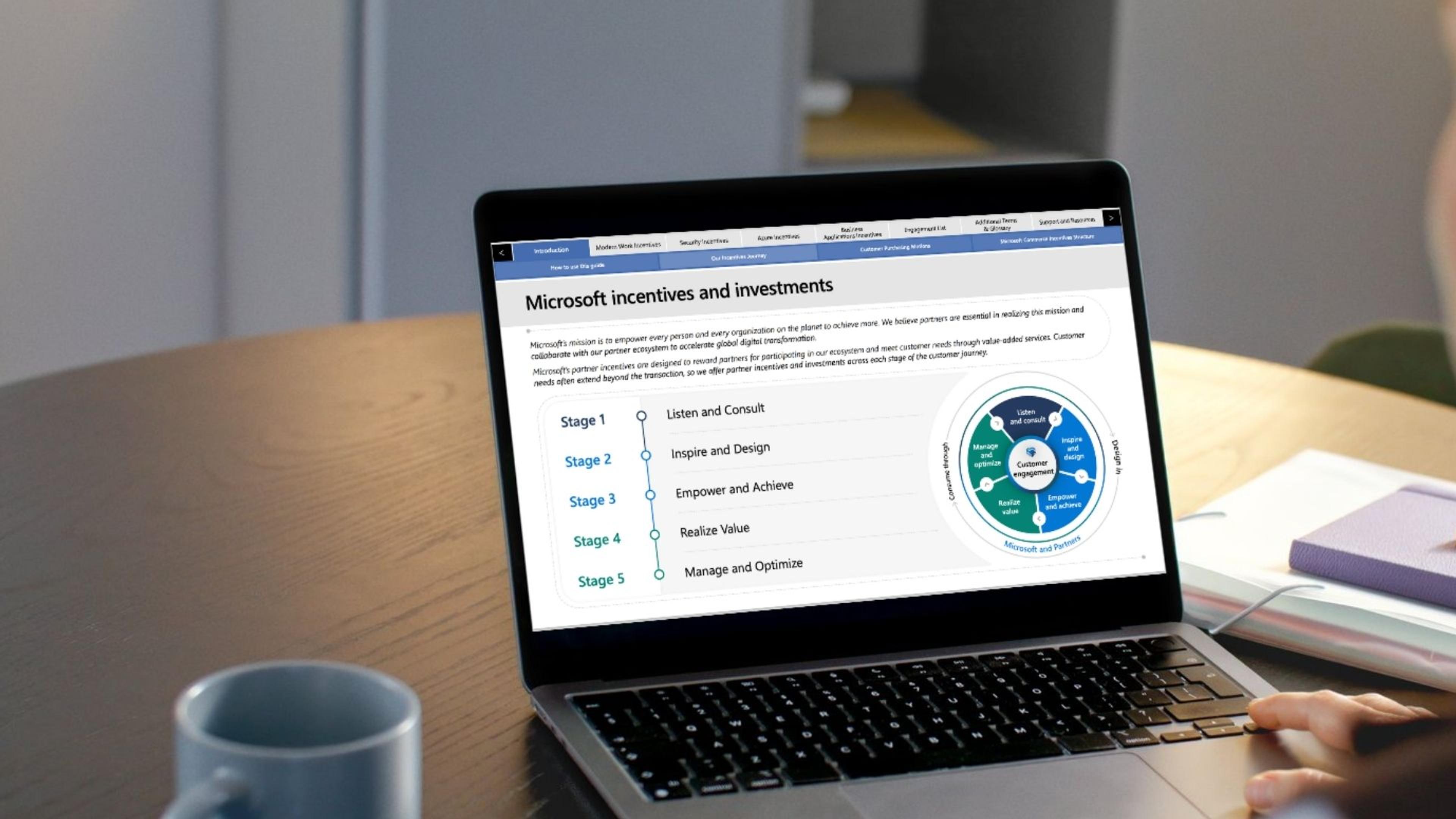
Focusing on M365 Copilot also aligns with Microsoft’s priorities and incentive structures, which amplifies partner opportunities:
- Seller compensation – Microsoft has updated its compensation plans so that sellers are rewarded for co-selling partner solutions. Because Azure marketplace transactions now count toward a seller’s consumption goals, sellers have a strong incentive to refer deals that include partner-delivered Copilot services.
- Strategic emphasis – According to the MCAPS framework for fiscal 2025, Microsoft’s top priority is to have “Copilot on every device.” The company has increased its investment in Copilot tenfold and is positioning AI as the centerpiece of its growth strategy. By building a Copilot centric practice, partners align themselves with the most heavily supported initiative in the Microsoft ecosystem.
Aligning with corporate strategy and seller incentives means partners who simplify M365 Copilot adoption will see more referrals, more marketing support and greater co-sell opportunities.
Conclusion: Start Where the Value Is
Copilot Studio and Azure AI Foundry are powerful options when you need custom agents or fine-grained control. They target different audiences, pro makers and professional developers respectively, and require varying levels of skill and infrastructure. But for partners focused on profitability and momentum, M365 Copilot offers the best starting point.
It deploys quickly, delivers instant value and opens a stream of high margin, repeatable services. It aligns perfectly with seller incentives and corporate priorities. If you want to build or scale your AI practice, start with M365 Copilot, leverage the infographic from Howdang Rashid as your reference, and use the opportunity to grow both your customers’ capabilities and your own business.